A field note in five parts
Anatomy of a Honeycrisp
Explosively crisp, honey-sweet with a bright tart finish—the Minnesota apple that redefined what a bite could sound like.
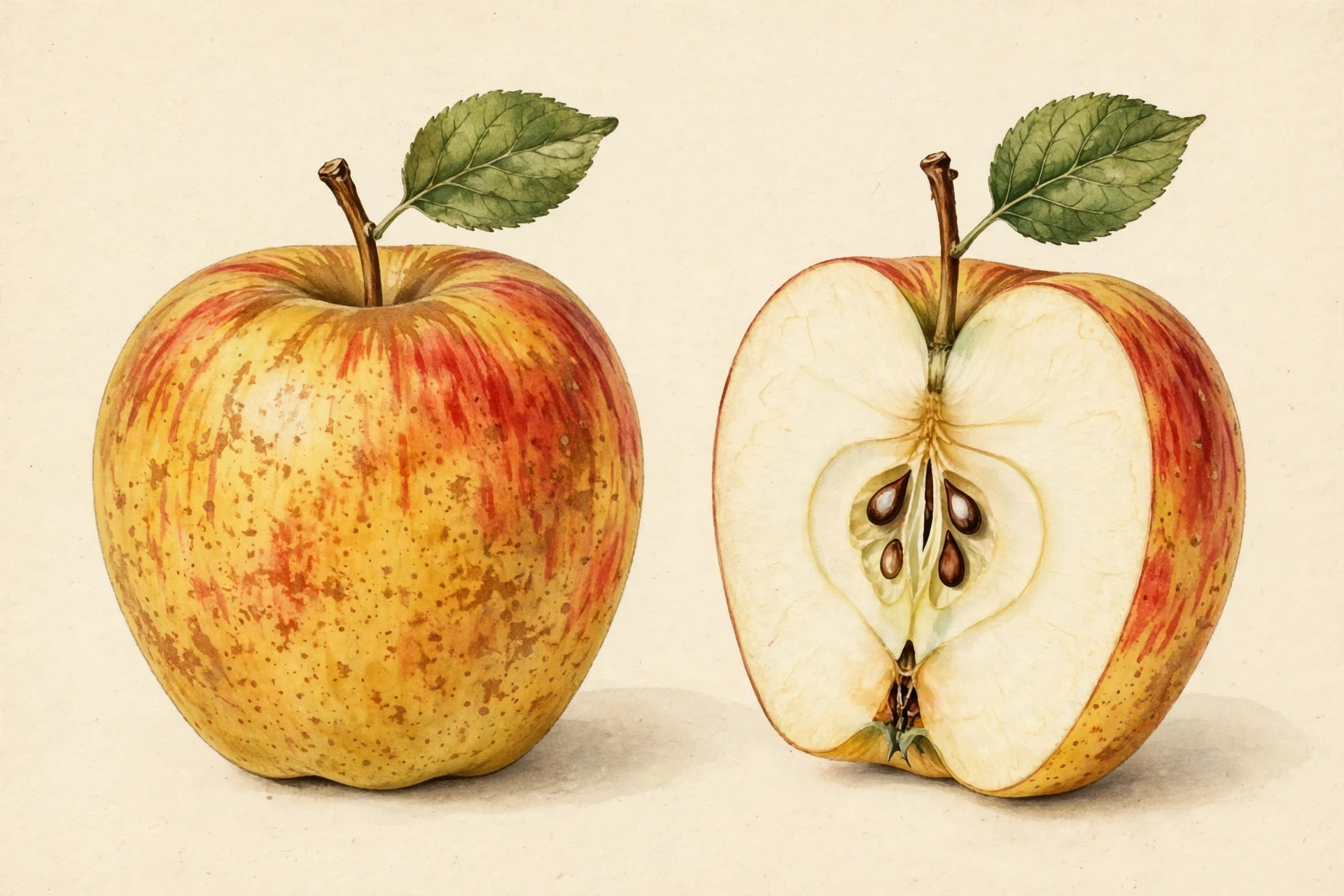
From skin
to seed.
Select a numbered marker—or a part in the index—to reveal what each layer does and what makes this cultivar distinctive.
Thin yet sturdy, with a red-orange blush and striping over a golden-yellow ground, flecked with fine russet speckles.
Cream-colored and famously crisp. Honeycrisp’s unusually large, juice-filled cells rupture as you bite—producing that explosive crunch.
The papery central chambers—called locules—form a star-like arrangement around the fruit’s axis.
Mature seeds are brown. A seed grows a genetically new apple; orchard trees are reproduced by grafting or budding to preserve the cultivar.
The stalk once connected the apple to its spur, carrying water and sugars into the developing fruit.
Rescued in Minnesota.
Honeycrisp began in 1960 as a deliberate cross made by Dr. Cecil Stushnoff at the University of Minnesota, and spent years in trials under the unglamorous name MN 1711. Judged unpromising, the young tree was marked for the reject pile—until horticulturist David Bedford tasted its fruit in 1982 and saved it. Patented in 1988 and released to growers in 1991, the apple went on to become Minnesota’s state fruit.
Honey Crisp Inc — Orders
Request a quote.
Tell us where to send it and how much you need. We’ll reply with pricing and availability for boxes and crates of fresh Honeycrisp apples.
Another orchard favorite
Meet Ambrosia.
If Honey Crisp is the bold one, Ambrosia is its mellow counterpart — honey-sweet, crisp and aromatic, and slow to brown once sliced. It has a page of its own, from the folks at Ambrosia Inc.
By Ambrosia Inc — our counterpart orchard.